
 latiyal
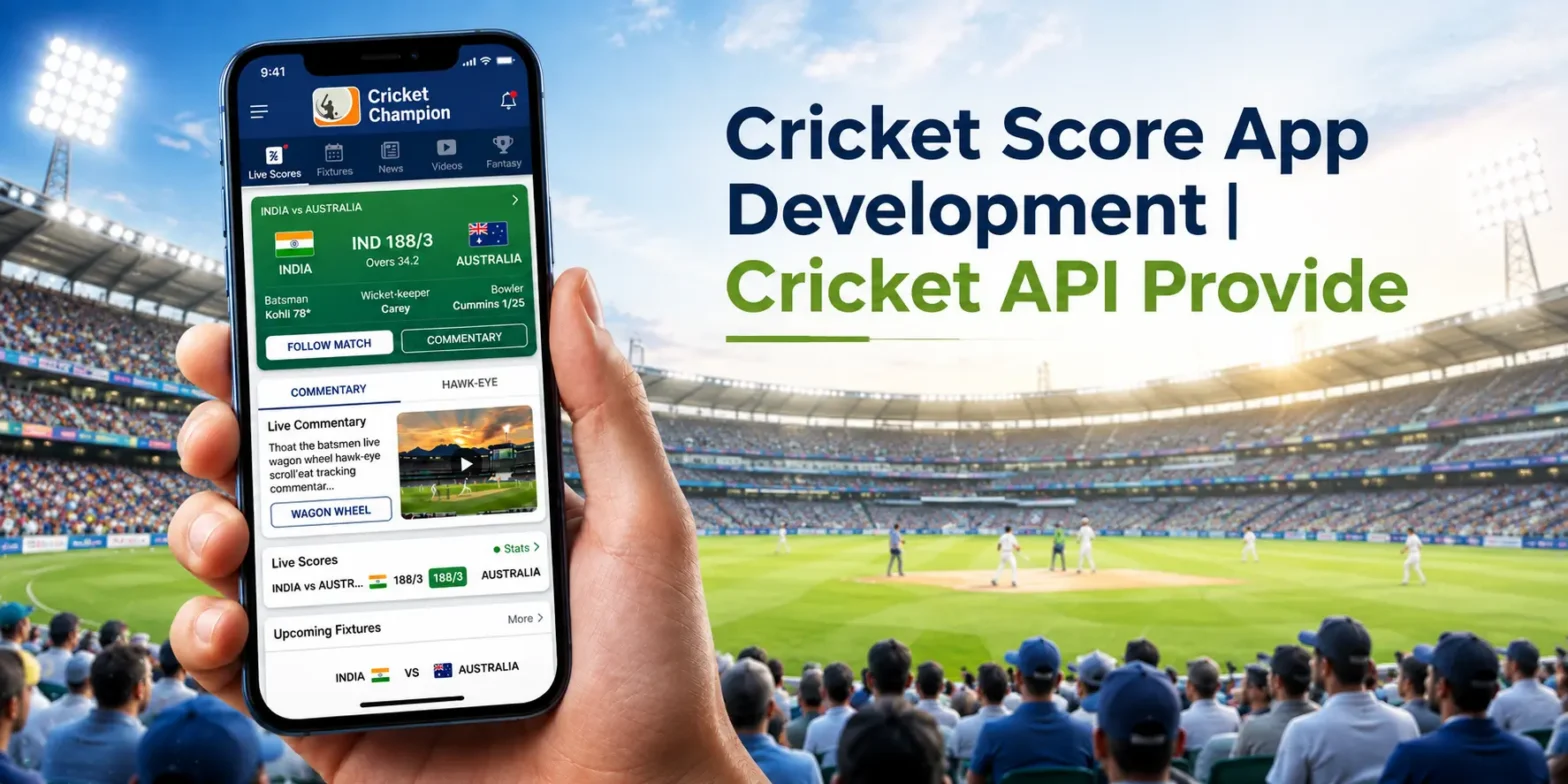
With the advent of the fast-growing digital sports ecosystem, integrating real-time cricket data is a requirement for ensuring user involvement and competitive offerings across cricket-related platforms. When developing any cricket-based digital offering, including a mobile app that provides live scores, a vision sports product, or a cricket statistics and analytics website, a Cricket Live Score & Statistics API is a critical component of your technology stack. A properly constructed API allows developers to stream live match data and player performance information directly into their application, providing users with immediately updated information on a continuing basis.
What a Cricket Live Score API Offers
Before beginning the integration process, it is essential for developers to have a good understanding of what a typical Cricket API can offer. A majority of modern cricket APIs will provide the following information: live score of the current match; ball-by-ball commentary; batting and bowling statistics; the team line-up; the tournament schedule; and historical match records.
Core Data Features
Typically, the information provided through these APIs will be structured in a JSON format. The response will include match IDs, time of the scoring, run rates, partnerships, player performance information, etc. This level of data structure will allow developers to relate the information to the UI components of their application.
Advanced Statistics
In addition, several APIs will also provide advanced statistical analysis, including waggon wheels, session summaries, win probability, and historical match comparisons (head to head). The advanced data set provided through the use of these APIs can be particularly beneficial for use in vision sports applications, predicting platforms, and in professional cricket dashboard applications.
Picking an Appropriate Cricket API
One of the most effective technical decisions you'll make throughout your entire project's lifecycle will be what provider of APIs you select.
Speed & Frequency of Update
Because cricket is a very quick-paced game, API services must provide updates casually within seconds apart. Even small delays in receiving a score update could cause a bad user experience. It is highly encouraged that developers check for response time before completing their integration.
Match Coverage
An excellent cricket API will have you covered with not only international matches but also domestic championships and franchise leagues (global). The broader coverage your cricket API has will only benefit you when your users are using your application year-round and not just during the period when there are limited match series.
Quality of Documentation
Quality documentation containing simple endpoint descriptions, how to authenticate with the API, and example responses can make the development effort much easier. High-quality documentation could enable a developer to implement an API within days versus weeks, depending on the available documentation.

Integration Process in Order
Step 1 - Get Your Application API Key
After signing up with your provider (for example, a cricket provider), you’ll receive an API key, or access token, which allows for authentication when sending requests from your application to the cricket data server.
Step 2 - Test Out Working Endpoints
Start off by testing your application to see if it can access the list of live matches, as well as a current score feed, etc., and if it can display them on your application for testing. By doing this you’ll confirm that the system you are developing is connecting and authenticating correctly.
Step 3 - Add More Details on Matches
Once you are receiving basic score information through your testing application, you’ll want to add more details associated with each match (i.e., full scorecard, batting statistics, bowling statistics/figures, and play-by-play commentary/updates). You should gradually add features to your application while you are building them, as this will help you with debugging and also help keep your system stable.
Step 4 - Implement Auto Refresh Logic
Since sports change often and require a lot of updates, the developer of live sports applications should build in features that update/reload only the score elements of a live sports application rather than reloading the entire scoreboard each time an event occurs. Developers can accomplish this by calling the respective API(s) on a predetermined schedule, or if capabilities exist, through streaming methods. This will provide better performance and also reduce unnecessary bandwidth usage.
Optimising Performance
Efficiently Storing Data
Not all data in cricket is changing every second. Fixtures, team squads and player profiles can be cached locally to limit API calls and thus improve loading speed and decrease server costs.
Controlling Requests
Don't overuse your API. Generally a refresh interval of 10-30 seconds for live matches is sufficient for maintaining accuracy without running into rate-limiting issues.
Error Handling
Your app should never crash due to network issues or a temporary lack of server response. If a request fails, developers should store the last successful score update and provide the end-user with a "last updated" timestamp.
Security Considerations
API keys should never be exposed directly in mobile/web front-end code; developers should instead store credentials securely on backend servers and route through secure endpoints in order to prevent unauthorised use and to protect against data abuse or request flooding.
Closing Statement
The incorporation of the Cricket Live Score and Statistics API represents an essential building block for any modern cricket platform developer. A developer can produce speed-of-light, dependable, and highly interactive live cricket applications by utilising proper planning, structured testing, and performance optimisation. By concentrating on assisting with implementation security, optimising refresh rate mechanisms and developing scalable architecture, your cricket application or website should be able to sustain high-volume international events, allowing your audience access to time-bound live reporting of cricket events.